
Share your Feedback online
Provide your feedback via our online survey.
Consultation has now closed.
In March, we consulted again with the Kilkenny community after earlier feedback suggested we should consider additional traffic calming options.
We asked for feedback on four options:
Option 1: Watts profile speed humps, as previously proposed
Option 2: Raised plateau single-lane slow points with landscaped islands, a narrowed, raised section of road to reduce speeds
Option 3: Angled slow points with landscaped islands, not raised, creating a gentle shift in the travel path to reduce speeds
Option 4: Hybrid option, Reynell Street only, combining single-lane slow points and angled slow points in different sections of the street.
Common themes throughout the consultation:
Based on feedback and detail received from a wide range of stakeholders, Watts profile speed humps will be installed in Reynell Street and Downer Street.
We also heard support for additional greening and landscaping. New trees have now been planted along the full length of Reynell Street and Downer Street to help enhance the streetscape.
Reynell Street
Works will include:
Downer Street
Works will include:
Aroona Road / Reynell Street intersection upgrade
The Aroona Road intersection will be upgraded to include speed cushions before the intersection and pavement treatments within the intersection.
Wilpena Terrace / Reynell Street intersection upgrade
A raised intersection will be installed on Wilpena Terrace.
An engagement summary report detailing the outcomes of consultation and verbatim comments is available for download or in the document library.
Construction is planned to commence between September and December 2026. Exact timing is to be confirmed.
Impacted residents will receive more information from the appointed contractor closer to the start date.
Thank you to everyone who took part in the earlier consultation (2025) on traffic safety improvements for Reynell Street and Downer Street, Kilkenny. Your feedback has helped guide the next stage of planning.
What we heard:
In February 2025, we asked our community for feedback on traffic calming option and received responses from 36 residents:
Key concerns raised included:
Overall, most respondents supported traffic calming, with interest in options that balance safety, parking and street amenity.
Following the initial consultation, we received further feedback requesting that additional traffic calming options be considered. In response, the revised design options have been developed, and we are now seeking community feedback before works proceed.
Revised traffic calming options:
You can also view the concept plans for both streets in the document library.
What is it?
A rounded “bump” across the road that cars drive over. Watts profile
humps are quite firm, so drivers feel them and slow down more than with
a gentler profile.
Benefits (Pros)
Things to consider (Cons)
When it works best
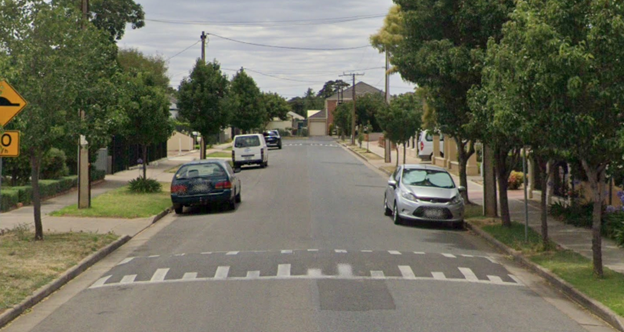
What is it?
A short section where the road narrows to one lane and is slightly raised.
Drivers slow down and give way to each other, so traffic moves more slowly
and steadily.
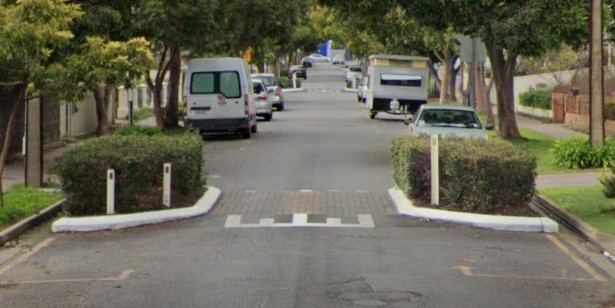
What is it?
A slow point where the road bends or “wiggles” around kerb build-outs, so
drivers must steer through an S-bend and slow down. Often still one lane
through the narrowest point.
Benefits (Pros)
When it works best
Provide your feedback via our online survey.
Consultation has now closed.
If you like to write your feedback down, we can send you a hard copy survey or download one here.
Prefer to speak with us? We can take your feedback over the phone.
View larger format concept plans at the Council Civic Centre in Woodville and pick up hard copy materials.
Concept plans are also available in the document library. Zoom in to view treatment locations.

Have questions or want to learn more about a project, contact us below:
| Phone | (08) 8408 1111 |
|---|---|
| council@charlessturt.sa.gov.au | |
| Website | www.charlessturt.sa.gov.au |
| In writing | PO Box 1 |